Heritage
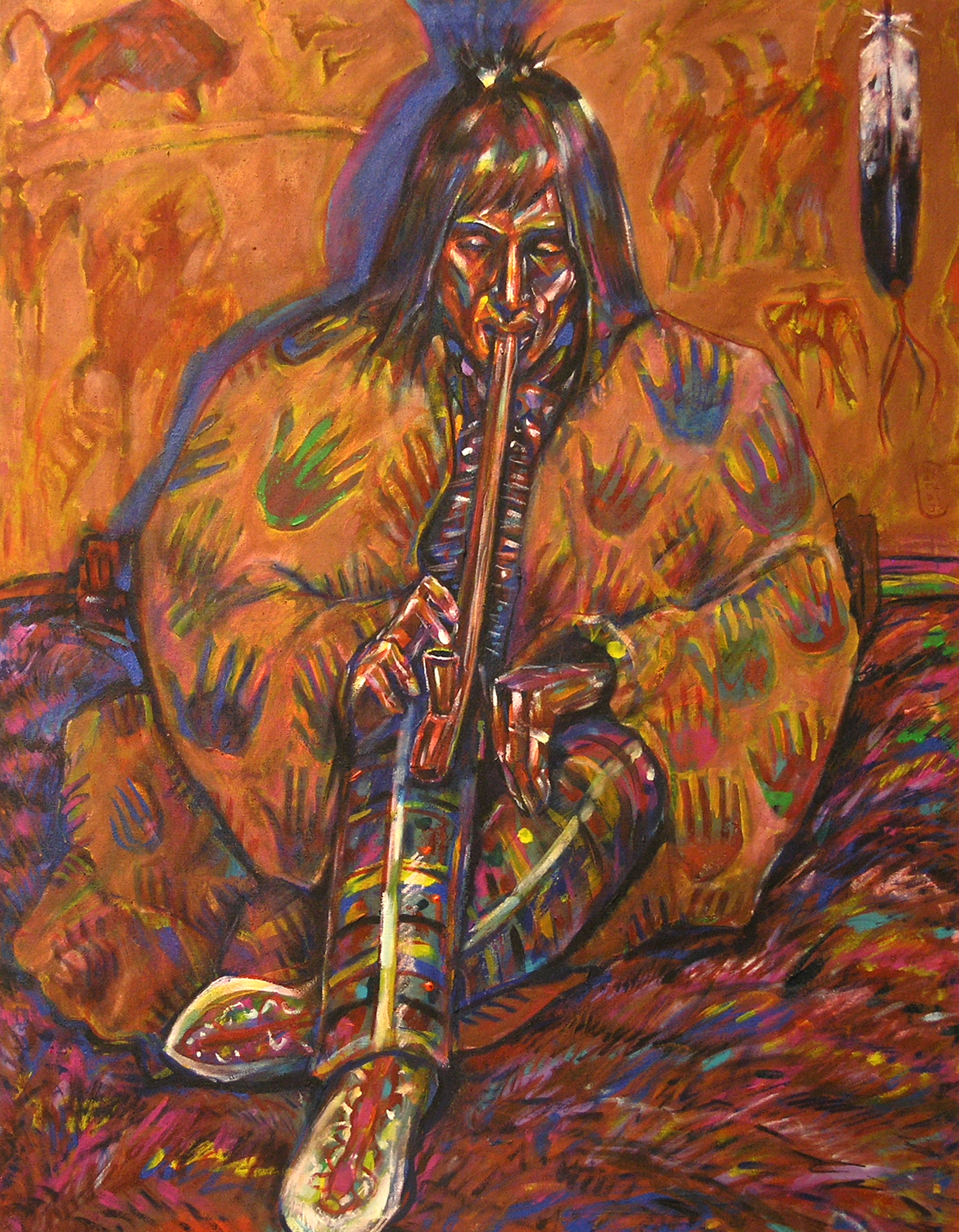
Jim grew up in Kingman, AZ in a western family of Native American and Mexican decent. The oral history, legends, and folklore of his people inspire much of his artwork to this day. The awareness of his family history, and being part of that history as it carries into the future makes it contemporary. He transforms the spoken words into a visual experience, and he is the storyteller sharing a part of himself for the world to see. Jim gets an idea, and he paints it, paraphrasing it into an image, usually starting with a figure as the central character. These characters are formed quickly in the romantic "Bambi" style cowboys and Indians of the Arizona Highways illustrators that influenced him at an early age. Once Jim starts painting he rarely stops, he lets his imagination take over as he tells the story around the characters in vignettes, adding details and allegory that create the magical world inside one of his canvases. He loves to tell stories, not necessarily from memory but from questions about what might have happened to this person or in this place. To Jim, the accuracy is not most important, the magic is in the making and searching for messages in the story, creating new thoughts and expressions, this is his personal contact with the history of his people.

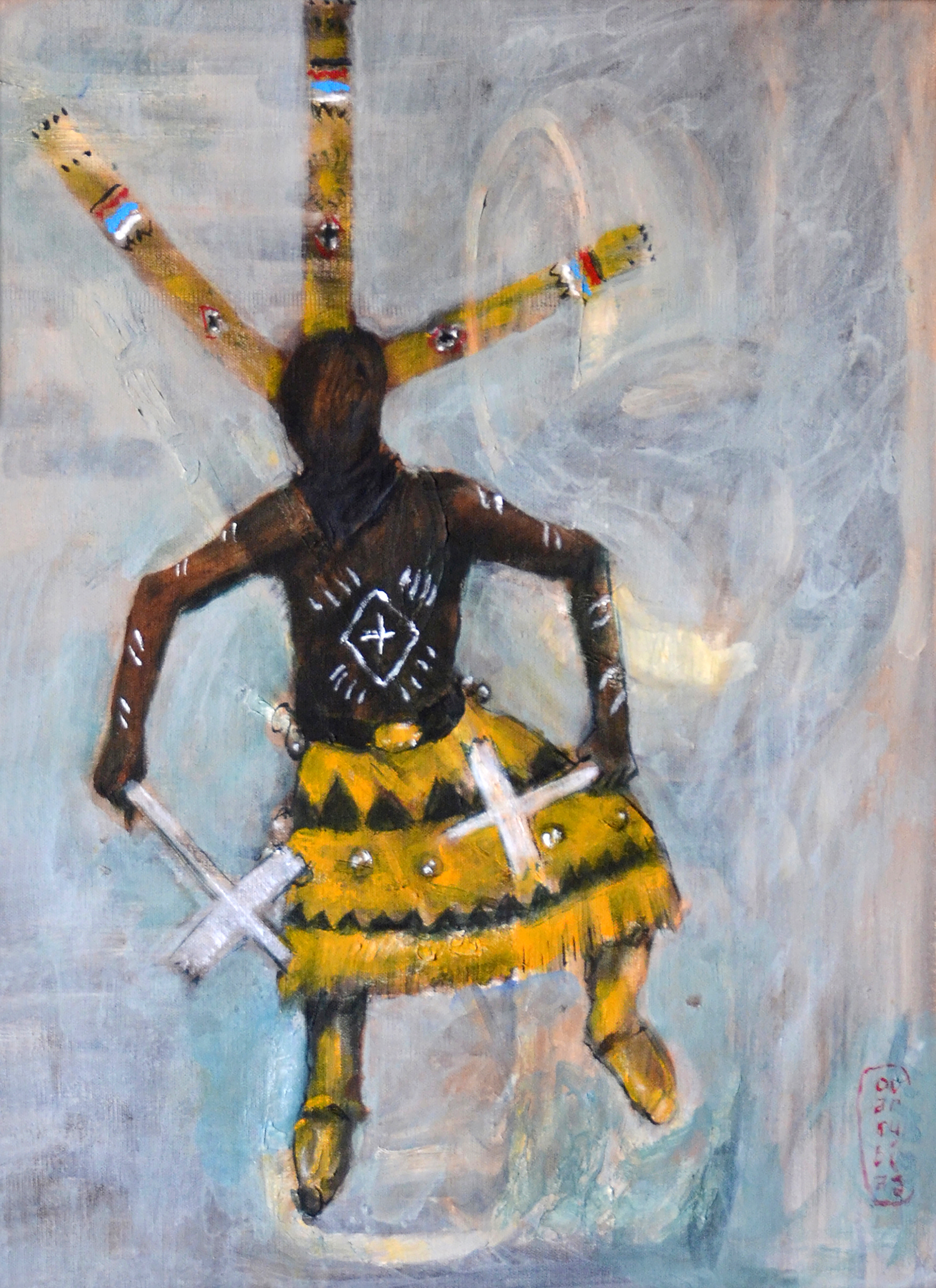

There are five dancers in the Apache Ga’an, or Crown, dance ceremonies. Four of the dancers are mountain spirits or spiritual ancestors that represent the cardinal directions, as well as lightning, clouds, rain, and snow. They each bring one of these natural blessings to the people (Inde”). The four dancers paint their bodies black and white and adorn themselves with lightning designs and animal motifs. The fifth dancer represents First Man (I’toi) honoring the ancestors and the original innocence of mankind. He is painted gray and plays the part of an unpredictable clown who is a messenger between the Apache and the Spirit People.
Traditionally, the dance would last four days as a healing ceremony to evoke blessings and ward off evil for the community. The sacred belief is that the Creator sends the Ga'an to guide the people, teaching them the path to a harmonious life with each other and the land. Often, tribal makers and artists carve Kachinas of the Ga’an from cottonwood or saguaro. Personal experiences with the traditions, photographs, or sculptures by other artists inspire Jim's paintings of ceremonial characters.



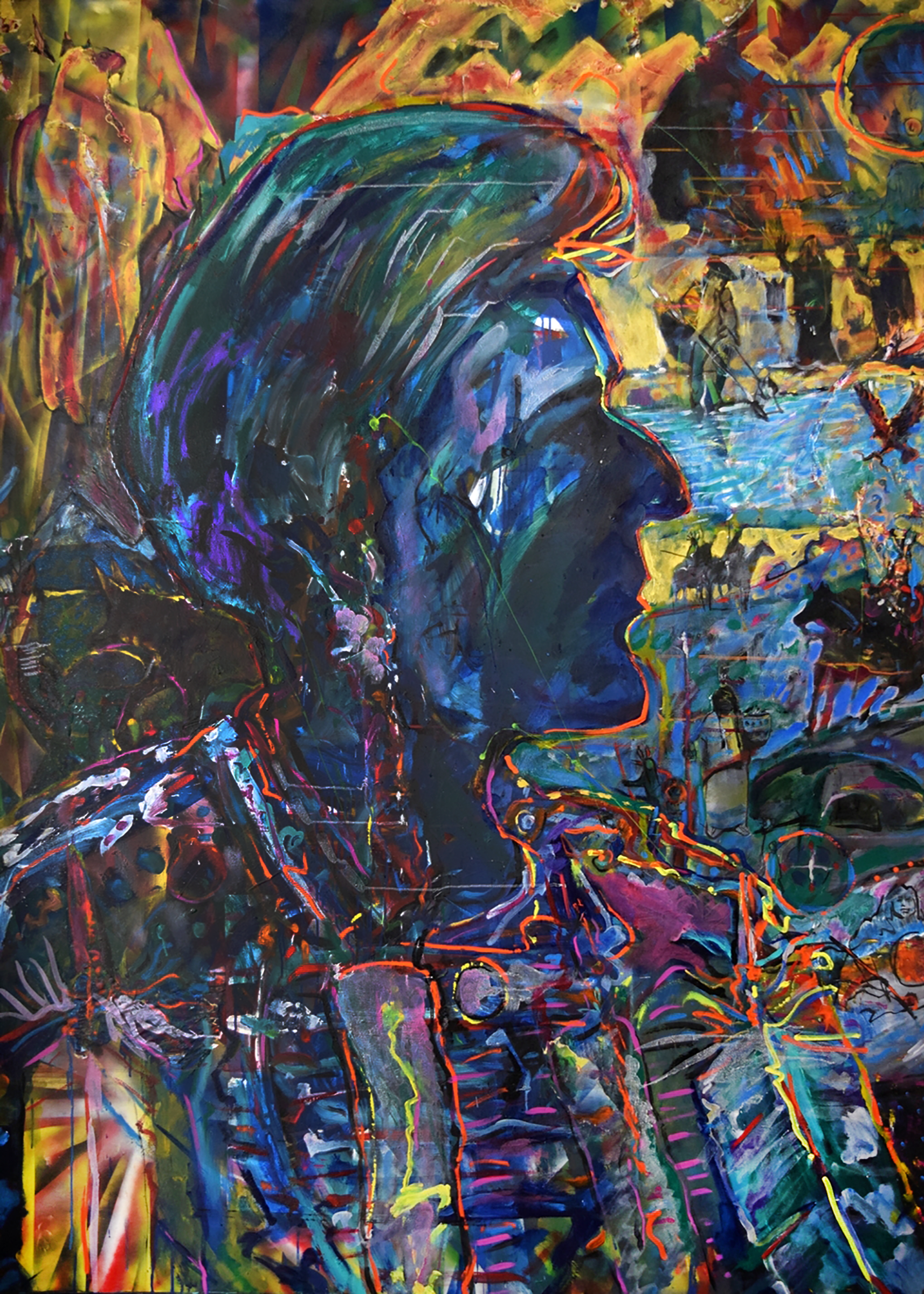

In 1862, the French Foreign Legion arrived at the city walls of Puebla, Mexico. They were to siege the town. Benito Juarez, President-elect of Mexico, a full-blooded Zapotec Indian, sent young general Zaragoza, a 28-year-old graduate of the prestigious Chapultepec Military Academy, the West Point of Mexico and a Cavalry Brigade to check the French. They were joined by townsfolk militia and natives from the area (Opata and Otomi). They charged out of Puebla the morning of May 5 and began a hand to hand battle with the surprised French who had just arrived the day before and were still setting up their siege cannons. The vicious fighting raged for 4 hours, and then the French bid a hasty adieu to Zaragosa led troops and the hornet’s nest they marched into. Two of Zaragosa's lieutenants would later be Presidents of Mexico.


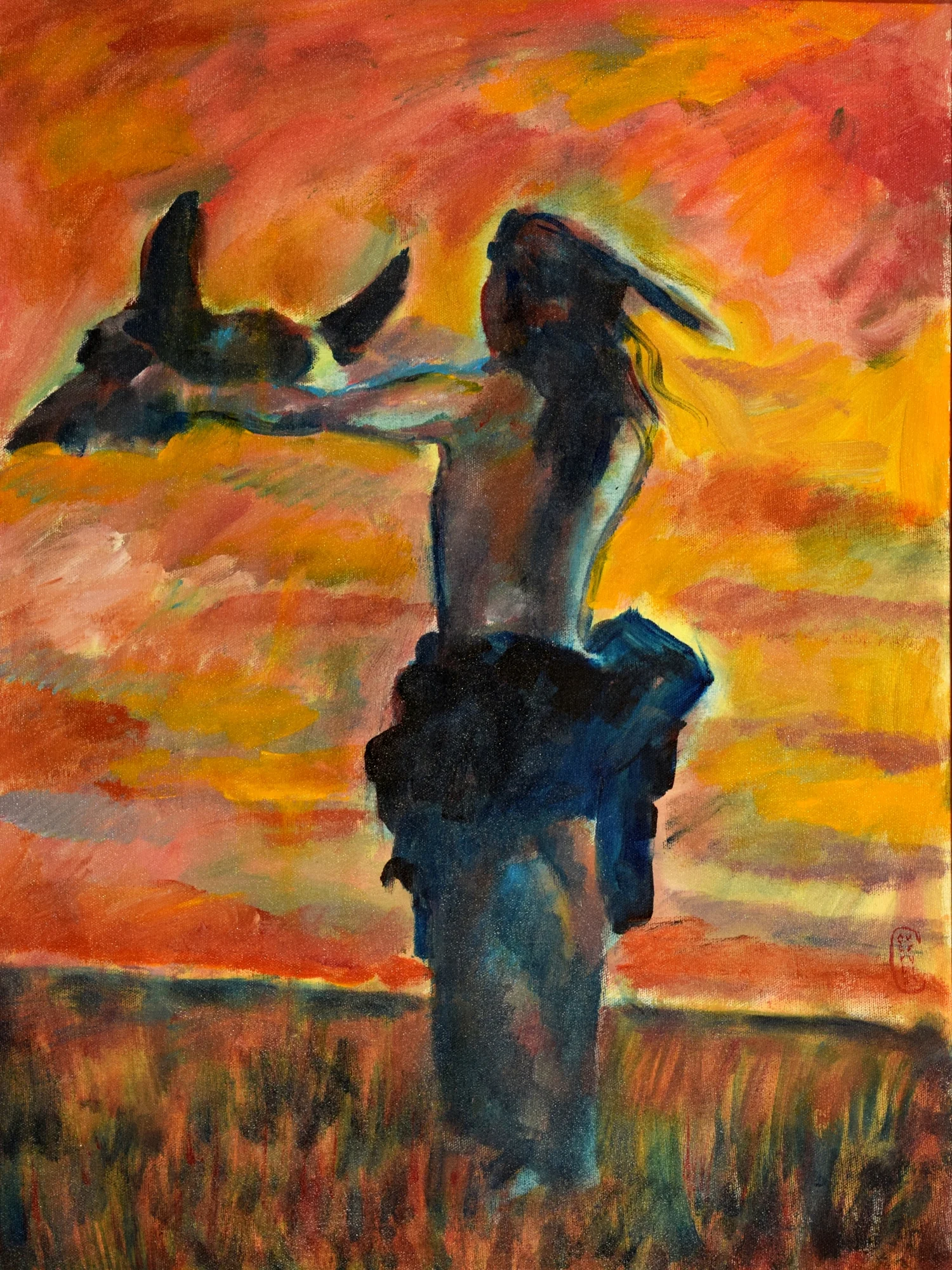


In some Native American cultures, young males entering adulthood undertake a vision quest as a rite of passage. This type of rite usually consists of a series of ceremonies, fasting, and spending time alone in nature or at a sacred site. The young person would pray to the spirits for a vision to help them find their purpose or role in the world and their community. Usually interpreted by an elder, the vision would lead them into adulthood and guide their future experiences.
Running you pray
Fasting you pray
Dreaming you pray
Sweatlodge you pray
On the mountain you're alone
You see your family
Those who have passed
Pangs of guilt and regret grip the pit of your stomach
You suffer from hunger, thirst, fear and doubt
You are lost, blind and exhausted
You see a light, it washes over you
Your spirit is free and lite
The Good Red Road is before you
You are Oyate Lute!
People of the Chanupah!
You walk on the Good Red Road!
Ho-kah-hey!


